This podcast presents reporting, interviews, and analysis on matters of public interest and is not intended as legal or other professional advice.
About this episode
In the opening episode of On Adoption, host Haley Radke introduces an examination of the experiences of birth/first parents and adoptees, the assumptions that shape public perceptions of adoption, and the industry that operates around family separation. Drawing on her experience as an adoptee and longtime podcast host, Haley asks whose stories have been missing from conversations about adoption—and what happens when we begin listening to them.
CW: This show contains mentions of suicide, domestic violence, and other difficult topics.
Confidential support resources in the United States and Canada are listed at the end of these notes.
“This is one of many examples of what we would call in adoption circles "a permanent solution to a temporary crisis." “
This phrase echoes a saying documented in suicide prevention discussions by the early 1980s and also used in birth-mother advocacy, although its original author has not been established. Some attribute its mental health usage to famous users of the expression, such as Phil Donahue (unverifiable) and Ann Landers, as well as Robin Williams (unverifiable). It is basically an axiom that has been employed in various contexts for 40 years, including adoption, but most consistently as a “saying” whose origin and original context are still a mystery.
Congressional testimony, Iris Bolton (1984) — Bolton uses the suicide-prevention version of the expression during a November 1984 U.S. House hearing.
Ann Landers, The Spokesman-Review (1997) — In a response to a teenage reader, the nationally syndicated advice columnist repeats the familiar saying and notes that she had used it for many years.
First Mother Forum (2009) — A first mother's guest essay describes adoption as a lasting response to circumstances that may later change.
Open Adoption & Family Services (2025) — This adoption provider uses Haley's exact “temporary crisis” formulation while arguing for parenting support and informed choice.
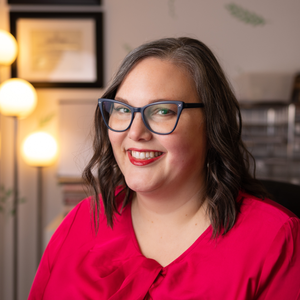
“I’m Haley Radke. I’m 42, I'm married, and a mom to two teen boys. I live in Edmonton, Alberta, Canada, and I'm a host of a podcast called Adoptees On, where I talk to adoptees – like myself – about the impact that adoption has on our lives.”
Haley Radke — host biography — Haley introduces herself and her work documenting adoptees' experiences through conversations and interviews.
Adoptees On — Haley's longstanding podcast features conversations with adoptees about identity, relationships, and the impact of adoption.
On Adoption — The new series website provides information about Haley's documentary podcast and its launch.
“In my years of interviewing adoptees, I’ve had conversations about the lifelong impacts of adoption: our higher rates of suicide attempts and substance use disorder. Our missing medical histories, struggles with identity and knowing who we are.“
Keyes et al. (2013), Risk of Suicide Attempt in Adopted and Nonadopted Offspring — A U.S. cohort study found elevated odds (nearly 4x) of reported suicide attempts among the adopted adolescents and young adults studied.
Yoon et al. (2012), Substance Use Disorders and Adoption — A U.S. adult-survey analysis found higher lifetime prevalence (half v about a third) of substance-use disorders among adoptees, including alcohol.
Lee et al. (2021), Adult Adoptees and Direct-to-Consumer Genetic Testing — This study explores how adoptees use genetic tests to seek biological family connections, ancestry, and missing health information, which is increasingly important for adoptees as we learn more about genes and epigenetics and future outcomes.
“But I’ve always wondered where are all the real stories about birthmothers? Think about it, When you imagine a birthmother, what's the first thing that comes into your mind? Is it a teen girl or college-aged woman who places her baby in order to preserve the future she had planned? How about a woman struggling with addiction and who is unfit to mother at this time? In pop culture we see them as saints, as whores, as immature, as dangerous. “
Birth/first-mother stories and cultural portrayals:
Ann Fessler, The Girls Who Went Away — Based on oral histories with more than 100 women, this book documents secrecy, pressure, separation and its long aftermath during the pre-Roe adoption era.
Gabrielle Glaser, American Baby — The intertwined lives of Margaret Erle and her son David illuminate institutional practices and the consequences of closed adoption, focused on the Baby Scoop Era of the 1950s-60s in the U.S.
Gretchen Sisson, Relinquished — Interviews with contemporary U.S. mothers examine how family resources, expectations, and constraints shape infant-placement decisions.
Philomena (2013 film) — This drama follows an Irish mother's search for the son separated from her and adopted internationally.
Research testing present-day stereotypes:
Gretchen Sisson (2022), Who Are the Women Who Relinquish Infants for Adoption? — Records from six adoption agencies covering 8,658 adoptions illuminate the ages, parenting histories and circumstances of contemporary birth mothers.
Hanlon et al. (2026), Deciding on Adoption: Birth Mothers' Motivations — A survey analysis of 768 birth mothers identifies overlapping factors including resources, personal circumstances, hopes for children, and perceived pressures.
“In this show, we’ll hear from the parents who are silenced, question the multi-billion dollar adoption industry, and reexamine some of my assumptions about the birth mother experience.”
Adoption industry: Investigations and reporting
Gretchen Sisson (2024), TIME, How Online Adoption Ads Prey on Pregnant People — Drawing on women's experiences, including Taylor's, Sisson examines how adoption advertising reaches pregnant people seeking help with parenting.
FRONTLINE and Retro Report (2026), Baby Brokers — This freely available investigative documentary and transcript examine adoption brokers, interstate placements, and the regulatory gaps affecting pregnant women and prospective adoptive families. In addition, Gabrielle Glaser explicitly describes U.S. adoption as a “multibillion-dollar industry” in the documentary.
Adoption industry: Numbers and economics
Gretchen Sisson (2022), Estimating the annual domestic adoption rate and lifetime incidence of infant relinquishment in the United States — Estimates approximately 18,300–20,000 U.S. private domestic infant adoptions per year using earlier national data.*
U.S. Children’s Bureau (2022), Planning for Adoption: Knowing the Costs and Resources — Reports typical private-agency adoption costs of $30,000–$60,000, including multiple services and legal expenses.*
*While many observers consider adoption in the U.S. to be a multibillion dollar industry, specific available evidence is difficult to substantiate, but calculations suggest that private domestic infant adoption in the United States involves spending on the order of $1 billion annually, although there is no comprehensive national revenue or expense figure. Combining Gretchen Sisson’s estimate of approximately 18,300–20,000 adoptions per year with the U.S. Children’s Bureau’s typical private-agency costs of $30,000–$60,000 yields an illustrative possible range of about $550 million–$1.2 billion in annual spending. The wider adoption economy includes other types of adoption and related services, which may bring the total into several billions annually.
SUPPORT RESOURCES
Suicide and crisis support (United States and Canada) — Call or text 988 in either country, 24/7; the U.S. 988 Suicide & Crisis Lifeline and Canada's 9-8-8 Suicide Crisis Helpline are separate national services.
National Domestic Violence Hotline — United States — The hotline offers confidential domestic-violence support, safety planning and referrals by phone, text or online chat.
ShelterSafe — Canada — ShelterSafe helps people locate shelters and provincial or territorial services for women and children experiencing abuse.
The Family Preservation Project - Where moms and resources meet. A comprehensive list of parenting resources available in the US, listed by state.
Saving our Sisters - Saving Our Sisters (SOS) supports expectant families navigating adoption decisions. We provide clear, fact-based information and practical help—so families can make fully informed choices and avoid a permanent decision driven by a temporary crisis, pressure, or misinformation.
CREDITS
On Adoption is an original documentary podcast series from Haley Radke Media Inc., created, hosted, and executive produced by Haley Radke. The series is produced by Haneul Projects & Kirya Traber. Dennis Funk of Written In Air is our supervising producer and story editor. Original Music and Sound Engineering by Alex Lewis. Research by Carl Niedzielski, MA.
Support this work
Financial support for On Adoption comes from Adoptees for Family Preservation, a registered 501(c)(3) committed to adoptee and first/birth parent centered storytelling. You can support the continued success of On Adoption and endeavors like it by donating here.
Thank you
Thank you to Adoptees for Family Preservation: President Sullivan Summer, Secretary Lora Alegria, and Treasurer Lilly Anspach. Thank you to Seraphina Kirsch, and our community of donors who helped bring On Adoption to life. You literally made this project possible. I am deeply grateful for your generosity of time, talents, and financial contributions.
Thank you to the advisory panel who helped shape this series while in the early phases on topics such as ethical storytelling, the scope of reporting, and logistical planning, among others. I couldn’t have done it without your wisdom and expertise! Lora Alegria, adoptee and communications expert; Katie Burns, birth mother and founder of The Family Preservation Project; Astrid Castro, adoptee, founder and CEO of Adoption Mosaic; Dr. Abby Hasberry, adoptee, birth mother, and therapist; Sullivan Summer, adoptee and independent scholar; and Dr. Kathleen Thompson, adoptee and therapist.